
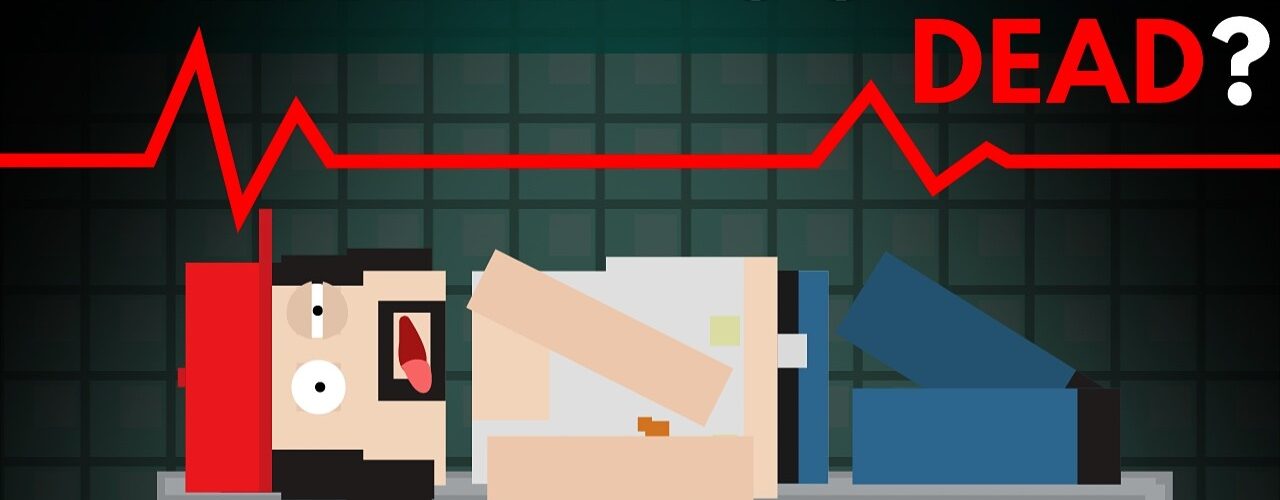
Why Defining Death Has Changed Over Time
Dying can be easy; living creatures are great at dying. But bringing you back to life? That’s a bit harder. Before you’re brought back from the dead, you have to be, well, dead. And at different points in history, that “dead-dead” marker has changed. As science progressed, so did our understanding of death.
You’re probably wondering why the set is very… land-of-candy chic. I thought if we had to talk about death, we could make the set fun to offset the depressing nature of it all, but it kind of backfired and made everything really creepy. I can’t return any of this, though, so we’re just powering through! Let’s talk about death in this happy-funtime episode of Life Noggin.
The Evolution of Death: From Cardiac Arrest to Brain Death
The definition of death has changed over time as scientists and doctors have learned more about the human body. Originally, a person was declared dead when their heart stopped beating, known as cardiac arrest, which causes them to stop breathing. But without modern medical tools, it was difficult to determine if death was truly permanent.
About 500 years ago, physicians began dissecting human bodies and studying anatomy, leading to a better understanding of death’s causes as malfunctions within the body rather than curses. However, even a century ago, doctors struggled to determine if someone was dead or just in suspended animation. They created all kinds of tests to check for respiration and heartbeat. About 50 years ago, the definition of death changed again, and death began to be considered as occurring when the brain stops working, a condition known as brain death.
What Happens During Cardiac Arrest?
This change resulted from life-saving advances in medicine that proved someone’s heart and lungs could be revived through CPR and defibrillation—but only if it happens quickly. Without a beating heart, the brain runs out of blood, which provides oxygen needed for brain cells to function. Within 6 seconds of cardiac arrest, you’ll lose consciousness. If the heartbeat isn’t revived quickly, brain cells begin to die, and the damage becomes irreversible. Studies show that restarting the heart with a defibrillator within 5 minutes of cardiac arrest gives someone a 50-70% chance of survival, but their chances decrease by 10% every minute afterward.
Even when someone’s heart is restarted, they may not regain consciousness. In these cases, doctors may lower the body temperature to preserve brain function by slowing metabolism and reducing inflammation. This is called therapeutic hypothermia, introduced in 2002, and has shown significantly better long-term neurological outcomes.
Predicting Health Events with AI Technology
These interventions come after cardiac arrest, but researchers are developing AI models that can predict the future—at least in terms of your health! These models aim to predict cardiac arrest before it happens and can also diagnose a wide range of other conditions, enabling preventive treatment.
Cryonics: Freezing Your Body Until a Cure Exists
If you’re dying from an illness without a cure, some scientists believe they have another solution: freezing your body and brain until doctors can heal you. This practice, known as cryonics, opens up new ethical questions as these technologies develop. People wonder if it’s okay to revive someone, how their quality of life might be altered, and whether life support should be used if there’s no chance for recovery. But the biggest question remains: Does brain death truly constitute death?
As technology evolves, maybe one day death will be just a temporary state rather than a final end.
Suggest More Topics for Life Noggin!
So, what “happy funtime” topic should I talk about next? Leave your sunshine-filled questions down in the comments and tell me what video I should make next! Click here to subscribe to Life Noggin for more interesting videos! You can also click here to watch our video on regenerating like Deadpool and Wolverine, or check out the amazing work Lifespan is doing to fight age-related diseases. Learn more in the description.
As always, my name is Blocko, this has been Life Noggin, and don’t forget to keep on thinking!
Sources for this video:
http://ndl.ethernet.edu.et/bitstream/…
https://www.britannica.com/biography/…
https://www.life-source.org/latest/wh…
https://www.sciencedirect.com/science…
https://journalofethics.ama-assn.org/…
https://www.life-source.org/latest/wh…
https://journalofethics.ama-assn.org/…
https://www.ncbi.nlm.nih.gov/pmc/arti…
https://www.ncbi.nlm.nih.gov/pmc/arti…
https://peh-med.biomedcentral.com/art…
https://www.ncbi.nlm.nih.gov/pmc/arti…





Add comment